
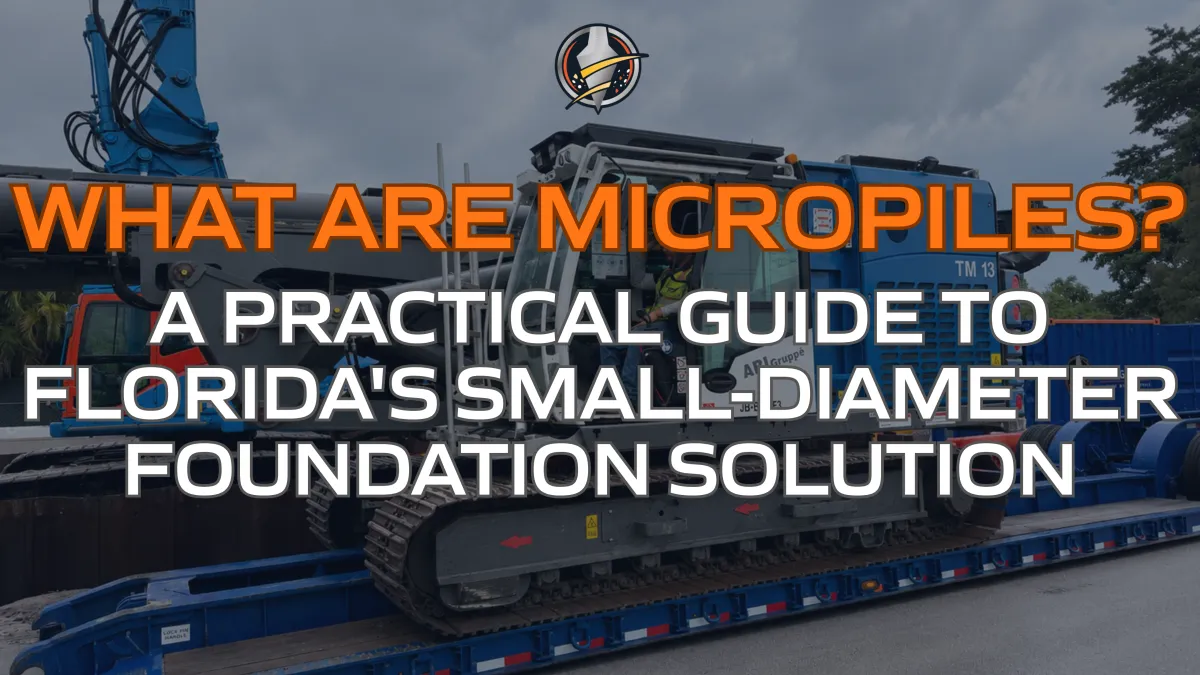
What Are Micropiles? A Practical Guide to Florida's Small-Diameter Foundation Solution
A micropile is a small-diameter, high-strength deep foundation element, typically somewhere between five and twelve inches across, built by drilling a hole, inserting steel reinforcement, and grouting the whole assembly in place. The steel carries the structural load. The grout bonds that steel to the surrounding soil or rock along the entire shaft length, not just at the tip. That full-length bond is what lets a pile smaller than a fence post carry loads that would otherwise call for something much bigger.
Size is the whole point. A drill rig that installs micropiles can fit through a basement doorway, work under a low ceiling, or set up in a backyard a full-size pile driver could never reach. Piling Pros' micropile work exists for exactly those situations: restricted access, structural reinforcement, slope stabilization, underpinning, and waterfront sites where a bigger rig simply isn't an option. It's one of three systems covered in the original comparison against sheet piling and helical piles, and it earns its spot for reasons the other two don't share.
Table of Contents
How a Pile This Small Carries a Real Structural Load
Picture a drill advancing a small-diameter hole through soil, fill, or even old foundation concrete, sometimes at an angle when vertical access isn't possible. Once the hole reaches design depth, a steel bar or casing goes in, and grout gets pumped down the shaft under pressure. That pressure matters. It forces grout into the surrounding soil, which increases the friction bond along the pile's length far beyond what a plain poured shaft would achieve.
Most of a micropile's capacity comes from that skin friction along the grout-to-soil interface, not from bearing at the tip the way a larger driven pile often relies on. Get the grouting right and a five-inch shaft can carry loads that would surprise anyone used to thinking bigger means stronger. FHWA's reference manual for micropile design and construction lays out the engineering behind that friction-driven capacity in detail, and it's still the document most engineers reach for when specifying one.
Where Micropiles Solve a Problem Nothing Else Can
Ask a foundation crew when they actually reach for micropiles and the answer almost always starts with access. Basements, narrow side yards, an interior renovation where the only way in is through a doorway built for people, not equipment. A micropile rig can be small enough to fit through that doorway, and that single fact opens up jobs a full-size pile driver couldn't touch.
Structural reinforcement comes up just as often, usually for less dramatic reasons than people expect. An addition changes the load on an old footing. A building gets repurposed for something heavier than it was designed to hold. Age catches up with a foundation that was fine for decades and suddenly isn't. In any of those cases, micropiles go in alongside or through the existing footing without tearing it out first, which is a big part of why they show up so often in underpinning work and in projects reinforcing existing buildings.
Then there's slope work, where piles go in at an angle to resist a hillside or embankment trying to move downhill, and waterfront sites, where high groundwater and soft coastal soil make a small, drilled footprint genuinely useful rather than just convenient. Different problems, same underlying reason micropiles get called in: something about the site rules out the bigger, faster options.
Micropiles vs. Helical Piles: Not the Same Answer to the Same Question
Both systems get reached for on tight, sensitive, or awkward sites, which leads a lot of people to lump them together as basically the same thing with a different name. They're not, and mixing them up on a proposal is an easy way to end up with the wrong bid.
A helical pile gets its capacity mostly from bearing at the helix plates, installed by rotation with no drilling or grout involved, and it verifies that capacity through installation torque as it goes in. A micropile gets most of its capacity from friction along a grouted shaft, and installing it means drilling first, then grouting, a slower and generally more expensive process. Where soil conditions include dense obstructions, old foundation material, or rock that a helical pile's rotation can't push through, a micropile's drilling method gets past what stops the other system cold. Where speed and lower cost matter more than pushing through obstructions, helical piles usually win instead.
Capacity verification for a micropile typically runs through the same load testing framework used across deep foundations, covered in more detail in how pile load testing confirms capacity.
Terms Worth Knowing Before a Micropile Proposal Lands on Your Desk
A few terms tend to trip people up the first time they see a micropile proposal, so it's worth walking through them plainly.
Skin friction is the resistance a pile's shaft generates against the surrounding soil along its full length. Larger piles often lean on bearing at the tip; a micropile leans almost entirely on this friction instead, which is the whole reason grout quality matters so much more here than it does elsewhere.
Grout doesn't just get poured into a micropile hole, either. It gets pumped in under real pressure, a process called pressure grouting, and that pressure is what forces the grout out into the surrounding soil rather than just filling the drilled hole. More surface contact means a stronger bond.
Two more come up regularly. A casing is the temporary or permanent steel tube that keeps a drilled hole from collapsing in loose soil before the grout can lock everything in place. And reticulated micropiles describes a whole network of piles installed at different angles under one structure, often the setup used when a foundation needs support from more than one direction at once. DFI's micropile committee keeps refining the design guidance around all of this as more real-world performance data comes in, so the specifics do shift over time.
Where Micropiles Aren't the Right Call
Tight site or difficult soil doesn't automatically mean micropiles. Sometimes it just means the crew hasn't ruled out something simpler yet.
If a project has normal access and needs a lot of axial capacity, a single larger driven pile or drilled shaft usually costs less than a cluster of micropiles engineered to carry the same total load. If access is fine but the schedule is tight, helical piles often finish faster, since there's no drilling or grouting step slowing things down. And on anything budget-sensitive, it helps to know upfront that micropiles typically cost more per pile than conventional systems. That premium only makes sense when the access constraint genuinely rules out the cheaper options. If it doesn't, the premium is just a premium.
How Piling Pros Approaches Micropile Projects
The access constraint or structural problem gets evaluated first, not the pile type. Site access, headroom, existing foundation conditions, and the actual loads involved all get reviewed together before anyone recommends micropiles specifically.
Sometimes that evaluation points straight at micropiles. Just as often, it points somewhere cheaper or faster, and that's the recommendation that goes out, even though micropiles are a more specialized (and typically more profitable) system to sell. Nobody wins long-term by talking a client into the fancier drilling rig when a helical pile crew could've finished the job in half the time for less money.
Mistakes That Cost Time or Money Here
Assuming micropiles are always the "tight site" default. Helical piles solve some of the same access problems faster and at lower cost when soil conditions allow it. The access constraint alone doesn't decide the system.
Skipping grout quality control. Since most of a micropile's capacity comes from the grout-to-soil bond, inconsistent grouting pressure or volume directly undermines the pile's real-world capacity, even when the drilling itself looked fine.
Underestimating installation time on a tight schedule. Drilling and grouting each pile individually takes longer than driving or turning a comparable system, and projects that don't build that time in end up compressing other phases to compensate.
Treating reticulated micropile underpinning as a simple add-on. Installing a network of angled piles beneath an existing structure to stabilize it is a specialized sequencing problem, not a routine extension of standard foundation work.
Frequently Asked Questions
How much weight can a micropile actually carry?
More than the diameter suggests. Diameter, grout quality, and soil conditions all factor in, but shaft length and how well the grout bonds to the surrounding soil drive most of the capacity, not how wide the pile is.
Are micropiles more expensive than driven piles?
Usually, per pile. Drilling and pressure grouting just take more time and setup than driving a prefabricated element into the ground. That math flips, though, the moment access constraints take driven piles off the table entirely.
Can micropiles be installed inside an existing building?
That's actually one of the main reasons the system exists. A compact drill rig can work through a standard doorway or under a low ceiling that would stop larger equipment before it even got started.
Do micropiles work well in Florida's soil conditions?
On sites with fill, old foundation material, or soil that's been disturbed over the years, often yes. The drilling process can push through layers that would stop other systems cold. A site-specific geotechnical evaluation still comes first, every time, before that gets treated as a given.
What to Do Next
If limited access, an existing structure, or unpredictable soil is shaping what you think is possible on a foundation project, it's worth finding out whether a small-diameter drilled system actually solves the problem before assuming it's the only option or ruling it out entirely. Send Piling Pros your project details and we'll evaluate it against your actual site conditions and access constraints.